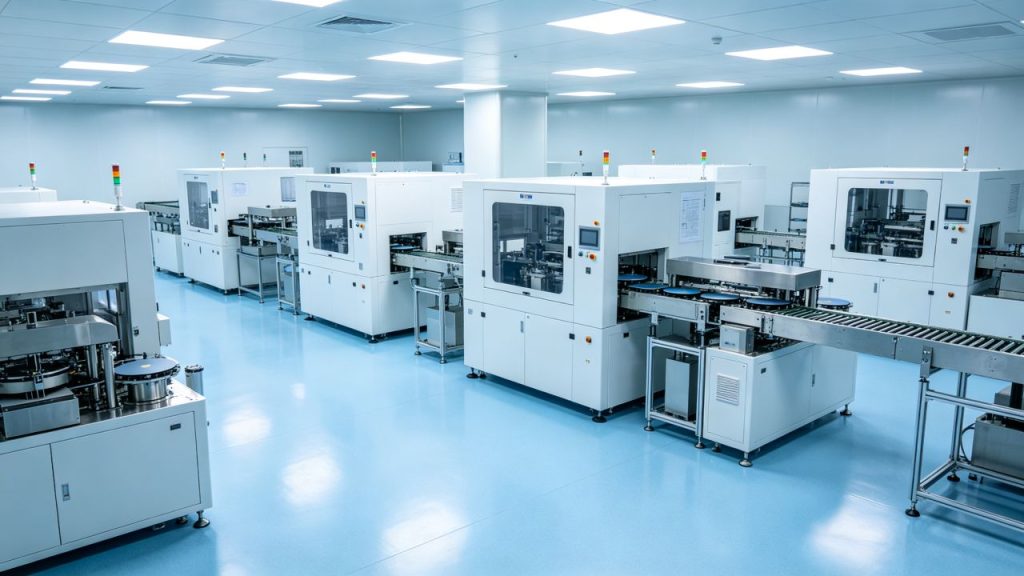
5 Awards, 120K Engineers: Inside BYD R&D Engine
BYD swept 5 National Awards backed by 120K engineers & RMB 634B R&D. Full talent cluster breakdown: smart manufacturing to cobotics. With HR action checklist.
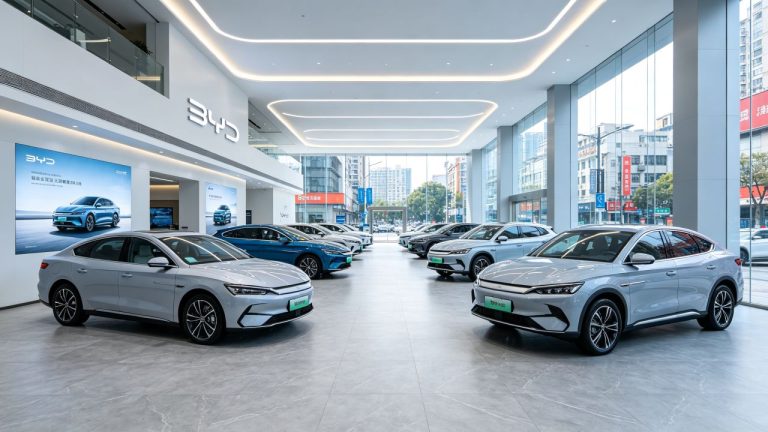
BYD's Five National Science Awards:
Deconstructing Full-Stack Talent Density in China's EV Champion
KEY FINDINGS
BYD swept 5 National S&T Progress Awards in the 2025 cycle -- covering smart manufacturing, electric motors, intelligent chassis, power batteries, and collaborative robots -- accounting for 62.5% of all automotive-sector awards.
2025 R&D spend reached RMB 634 billion (US$87.2B), with a 91.4% expense ratio -- burning through RMB 174 million daily. This exceeds the combined R&D of Geely, Great Wall, Chery, and XPeng.
Over 120,000 R&D engineers -- the largest engineering workforce of any automaker globally. 50,000+ graduates recruited between 2023-2025, with R&D roles accounting for 80% and MSc/PhD ratio at 70%.
The "collaborative robot" award signals BYD's technology boundary expanding from EVs into intelligent manufacturing equipment. The five award tracks map to a salary band of RMB 250,000-1.3M/annum (US$35K-180K).
#1 Among All A-Share Auto Firms
Minimal amortization burden
workforce globally (870K total)
23.6% above overall auto sector
"From its first State Science & Technology Award in 2020, to three in 2023, to five in 2025 -- this upward trajectory is backed by R&D intensity consistently held at 5.5%-6.5% of revenue for five consecutive years. BYD's singular R&D scale approximates the combined sum of Geely, Great Wall, Chery, and XPeng."
The 2025 National Science & Technology Awards have been announced. Out of 133 Second-Class State Science & Technology Progress Awards, BYD alone claimed five -- nearly 4% of the total. This is not just an automotive-sector record; it signals a fundamental shift. When an automaker's award list includes both "smart manufacturing equipment" and "collaborative robots" alongside electric motors and batteries, its technological footprint has transcended traditional automobile manufacturing. This report deconstructs the talent architecture behind these five awards, drawing on real staffing data, financial disclosures, and compensation benchmarks.
I. Five Awards Decoded: From Technology Breakthroughs to Talent Maps
BYD's five winning projects span smart manufacturing, electric drive systems, intelligent chassis, power battery systems, and collaborative robotics. SunTzu China Research has cross-referenced data from Liepin, 51job, BOSS Zhipin to map the talent landscape for each track.
Thin-Wall Resistance Welding Intelligent Quality Control -- Smart Manufacturing Equipment
Smart MfgRMB 250-450K/yrTSI >2.5This project tackles welding quality control for lightweight body manufacturing, spanning welding processes, machine vision, and closed-loop quality control. 51job data shows assembly-line engineers jumped to the #2 most-in-demand auto role in Q1 2026, reflecting surging mass-production needs. On Liepin, the Talent Shortage Index (TSI) for smart manufacturing roles consistently exceeds 2.5 -- fewer than four qualified candidates exist for every ten openings. Smart production line project managers at RMB 400-650K/year, with solutions architects reaching RMB 900K-1.5M including equity compensation.
Ultra-High Power Density, Extended-Duty Electric Motor Systems -- High-Efficiency Motors
E-DriveRMB 350-550K/yrMSc/PhD +67.65%Electric motors are the "heart" of NEVs. This project achieved breakthroughs in power density and extended service life. Key roles include electromagnetic design engineers, e-drive system integration engineers, and motor control algorithm engineers. 51job data shows motor engineering salaries at RMB 350-400K/year, with senior specialists exceeding 550K. Notably, Liepin's Q1 2026 report shows MSc+ new job postings in NEV grew 67.65% YoY, almost triple the overall auto-sector rate -- and motor/electronic control roles drive the steepest qualification escalation.
High-Safety, High-Fault-Tolerance, High-Efficiency Intelligent Electric Chassis -- Smart Chassis
Chassis/ControlsRMB 380-750K/yrSupply-Demand <0.38Smart chassis involves brake-by-wire, steer-by-wire, and active suspension -- dual-barrier expertise spanning vehicle dynamics and AI control. Liepin data shows AI control algorithm lead engineers at RMB 25-50K/month (15-month package = RMB 380-750K/year) and chassis ECU system engineers at RMB 20-40K/month. Public data pegs the supply-demand ratio for ADAS engineers at 0.38 -- each candidate faces nearly three open positions. Smart chassis talent pools are similarly constrained, as candidates must master both vehicle dynamics theory and Model Predictive Control (MPC) algorithms, creating a long cultivation pipeline with near-term inelastic supply.
High-Safety, High-Efficiency, Long-Life Power Battery System Measurement & Control -- Power Battery
Battery/BMSRMB 300-600K/yrStandard-Setting LevelThis project spans BMS algorithms, thermal management, and safety early-warning systems -- and established industry standards, signaling BYD has become a rule-maker in this domain. 51job data shows battery engineers above RMB 300K/year with BMS R&D directors exceeding 600K; energy-storage BMS engineers range from RMB 30-50K/month (14-month = 420-700K). Lithium carbonate prices surged 73% in 2025 (from RMB 75.7K to 130K/ton), further elevating battery engineers' strategic value. Talent flow data identifies battery/BMS as the highest-churn sub-segment in NEV, with second-tier talent consistently migrating to top-tier firms.
High-Precision Modular Collaborative Robots -- Cobotics
RoboticsRMB 450K-1.3M/yrJobs +215%This is the strongest strategic signal among the five awards: an automaker winning a National S&T Award for collaborative robotics -- and establishing a standards framework. Robotics algorithm engineers at RMB 450-700K, systems architects at RMB 700K-1.1M, and AI+robotics hybrid specialists at RMB 800K-1.3M; top-tier technical leads at leading firms can command RMB 1.5-2.8M including equity. Liepin reports Q1 2026 humanoid robotics job postings surged 215% YoY, with average annual salary at RMB 406.1K; motion control algorithm engineers at RMB 800K-1.2M. Both robot categories share core talent pools (motion control, force control, vision), and candidate supply remains critically tight.
II. The Financial Logic Behind RMB 634 Billion: Why R&D Expense Ratio Is a Hidden Signal for Talent Strategy
Before analyzing BYD's talent model, a key financial context is essential. In 2025, BYD posted revenue of RMB 803.965 billion (+3.46% YoY), with net profit of RMB 32.619 billion (-18.97% YoY). At first glance, this appears as "revenue up, profit down." But the profit contraction is, in significant part, the result of accelerated talent investment.
2.1 The Meaning of a 91.4% Expense Ratio
Of BYD's RMB 634 billion in total R&D spending for 2025, RMB 579.78 billion was directly expensed, with only RMB 54.22 billion capitalized -- meaning a 91.4% expense ratio and a capitalization rate of just 7.21%. This accounting choice deliberately depresses reported profits. For comparison:
| Company | 2025 R&D Spend | Cap. Rate | Expense Rate | Strategic Implication |
|---|---|---|---|---|
| BYD | RMB 634B | 7.21% | 91.4% | Aggressive expensing: sacrifices near-term profits for long-term competitiveness; no future amortization drag |
| Volkswagen | ~RMB 831B | ~30-50% | ~50-70% | Moderate-to-high capitalization; amortizes R&D over asset life |
| Toyota | ~RMB 750B | ~25-40% | ~60-75% | Conservative but operationalized; most R&D generates near-term product value |
| Tesla | ~US$25B | ~0% | ~100% | US GAAP: nearly all expensed, similar philosophy to BYD but with far fewer engineers |
Sources: Company annual reports, 21st Century Business Herald, Securities Times, SEC filings. Figures for non-Chinese companies converted at approximate exchange rates for comparative purposes. Capitalization rate = capitalized R&D expenditure / total R&D investment.
This "aggressive expensing" accounting philosophy is fundamentally a long-term commitment signal for talent investment. BYD does not smooth its income statement through accounting treatment: it burns through RMB 174 million per day directly on R&D. In 2025, per-vehicle profit fell to RMB 6,174 (down nearly 30% from RMB 8,500 in 2024), against an auto industry profit margin that dropped to 4.1% -- the lowest since 2015. This counter-cyclical talent investment stands in sharp relief against industry peers who are cutting costs.
2.2 A Global Talent Context
BYD's R&D scale -- at ~US$87 billion for 2025 -- places it among the top five global automakers by R&D spend, alongside Volkswagen, Toyota, Honda, and BMW. Crucially, however, BYD's R&D intensity (R&D/revenue = 7.89%) is the highest among mass-market automakers, far exceeding Toyota's 2.84% and VW's ~6%. Tesla, with ~US$25 billion in R&D, operates at roughly 12% intensity but with a fundamentally different R&D model: ~1,900 elite engineers at ~US$200K average compensation versus BYD's 120,000+ engineers at ~RMB 260K average -- a 3.4x per-capita compensation gap that reflects different philosophies (elite depth vs. mass scale).
Another critical signal is BYD's overseas expansion: 2025 overseas revenue reached RMB 310.7 billion (+40.05% YoY), representing 38.65% of total revenue. Overseas gross margin stood at 19.46%, well above the 16.66% domestic margin. With Hungary factory coming online in 2026 (300,000-unit annual capacity), plus Brazil and Thailand plants, and a fleet of 8 self-owned car carriers forming a global delivery network -- these moves create surging demand for talent with cross-border factory management, multicultural team leadership, and international supply chain coordination competencies.
III. The 120,000-Engineer Talent Engine: System Architecture
3.1 Organic Cultivation: From "Talent Harvester" to "Talent Crucible"
"Over half of the general managers reporting directly to Wang Chuanfu grew from campus hires. Yang Dongsheng (President, Automotive New Technology Research Institute) and Yang Feng (President, Yangwang Research Institute) are both BYD's own campus graduates. From 2023 to 2025, BYD recruited over 50,000 university graduates, with R&D roles accounting for 80% and MSc/PhD ratio reaching 70%."
BYD has ranked #2 among Tsinghua University's top private-sector graduate employers for three consecutive years, while also being a top destination for Shanghai Jiao Tong, Harbin Institute of Technology, and USTC graduates -- the only NEV manufacturer in this elite tier. In 2024, BYD committed RMB 3 billion to educational philanthropy, establishing university scholarships and funding NEV technology outreach programs, further cementing a "precision pipeline from campus to lab."
The cultivation model combines structured mentorship with immediate project immersion: new engineers are paired with senior mentors while being assigned to live engineering projects. The core advantage is cultural coherence and technical lineage -- organically-grown engineers possess a depth of understanding and institutional loyalty that external hires cannot replicate. Public data shows BYD's 2025 employee attrition rate at ~8.2%, far below the NEV industry average of 15%.
3.2 The Nine-Tier Grade System & Profit-Sharing Mechanism
BYD operates an A-I nine-level grade system. Engineering personnel are concentrated in levels E, F, and G, with three sub-levels within each. The table below maps the structure:
| Grade | Typical Role | Monthly Salary | Profit Share (Year-End) | Promotion Cycle |
|---|---|---|---|---|
| C-D | Principal Engineer / Chief Engineer | RMB 30-80K+ | Confidential (can exceed RMB 400K) | 10+ years |
| E | Senior Engineer / Middle Management | RMB 12-30K | Standard ~RMB 50K; high-performer 100K+ | 5-8 years |
| F | Engineer / Supervisor | RMB 6-15K | 2-3 months salary | 3-5 years |
| G | Assistant Engineer / Specialist | RMB 5-11K | Department baseline x grade factor x performance (approx. RMB 10-20K) | Entry (MSc=E, BSc=F) |
| H-I | Technician / Operator | RMB 3-8K | 13th-month or base bonus | -- |
Sources: BYD public compensation disclosures, employee feedback on social platforms, industry compensation reports. Profit shares disbursed each September. G1-D3 spans 12 sub-levels with profit-share multipliers from 0.85x to 21x.
A notable retention design: BYD heavily favors long-tenure employees. G-level staff with 5+ years receive year-end bonuses calculated as "base salary x 6 + project contribution awards," with total year-end payouts reaching RMB 120K+. This "tenure compound interest" model is BYD's core weapon in the talent war against EV startups offering higher starting salaries -- it trades long-term accumulation for short-term premiums.
3.3 2025 Compensation Adjustment & 2026 Campus Hiring Benchmarks
In late 2025, BYD implemented an across-the-board R&D salary increase, with software engineers and senior product design engineers seeing monthly ranges widened to RMB 15-25K. 2026 MSc graduate starting salaries reached RMB 18K/month, with PhD averages around RMB 38K/month. Cross-industry comparison: BYD MSc start (15-18K) vs. XPeng (18-22K) vs. Geely (14-16K) vs. Great Wall (12-15K). BYD's salary positioning sits at the upper-middle tier -- not the absolute highest, but when combined with full-stack career breadth and the profit-sharing mechanism, its composite appeal dominates the graduate market.
IV. Horizontal Comparison: The Structural Differences in Talent Strategy
| Company | 2025 R&D Spend | R&D Staff | Nat'l Awards* | Expense Ratio | Core Talent Strategy |
|---|---|---|---|---|---|
| BYD | RMB 634B | 120K+ | 9 | 91.4% | Organic cultivation + full-stack internal circulation + profit-sharing |
| Geely | RMB 219B | ~30K | 0 | ~36% | Global M&A + external talent acquisition + multi-brand matrix |
| Great Wall | RMB 149B | ~25K | 0 | 56.59% | Military-style management + internal competition + project incentives |
| Chery | RMB 147B | ~20K | 0 | ~77.8% | Wuhu stronghold + export-first orientation |
| XPeng | RMB 95B | ~8K | 0 | -- | Premium poaching + AI talent priority + elite small-team model |
*National awards = cumulative Second-Class State S&T Progress Awards from 2020, 2023, and 2025 cycles. Sources: Company annual reports, 21st Century Business Herald, Netcom.
The correlation is stark: national award count and R&D expense ratio are strongly positively correlated. BYD achieves the most national awards (9) with the highest expense ratio (91.4%) and highest absolute R&D spend (RMB 634B). This is not coincidental: lower capitalization rates signal more truthful, more conservative R&D expenditure recognition -- and more credible technological accumulation.
V. From "Cars" to "Robots": Three Directions of Talent Spillover
The inclusion of "collaborative robots" among the five awards, combined with BYD Electronics' expansion into AI data centers, robotics, and communications equipment, points to a clear trajectory: BYD's technology boundary is extending from automotive manufacturing into intelligent manufacturing equipment and AI infrastructure. Talent is flowing along three discernible vectors:
Vector 1: NEV talent → Robotics. Motion control, force-control algorithms, servo drives -- these are the shared core technology stack between NEVs and robotics. BYD's expertise in electric motors (Award 2) and smart chassis (Award 3) transfers directly into cobot and humanoid robot joint actuation systems. In H1 2026, BYD's autonomous driving team expanded from 5,000 to 7,000 (+40%), with a former Bosch China ADAS VP joining as Perception Algorithm VP -- evidence of accelerating "auto + robotics" convergence at the senior level. Industry data shows core humanoid robotics talent now jumps every 2-3 years (vs. prior 3-5), with salary increases of 30-45% per move; top candidates routinely hold three to five competing offers.
Vector 2: Automotive electronics talent → AI chips / computing infrastructure. BYD Semiconductor (IGBT, SiC power devices) and BYD Electronics (AI data center assembly) are absorbing automotive electronics engineers at scale. As ADAS computing power leaps from 10 TOPS to 1,000+ TOPS, in-vehicle chip design and automotive-grade AI accelerator development have become premium compensation tracks. Automotive electronics engineers now command above RMB 300K/year, with chip design roles reaching RMB 500-800K. Notably, ADAS algorithm engineers' primary outflow destinations include Huawei's Qiankun ADAS team (expanded to 7,500 in H1 2026), SiC/IGBT power semiconductor applications, and domain controller/EEA architecture roles.
Vector 3: Smart manufacturing talent → Cross-industry diffusion. BYD's Award 1 (welding quality control) lies in the smart manufacturing equipment domain. These competencies -- welding processes, machine vision, MES, IIoT -- are in demand far beyond automotive: electronics, aerospace, medical device manufacturing are all competing for the same talent pool. Liepin data shows "algorithm engineer" has entered the top four hot NEV functions (while absent from the overall automotive top-ten), signaling that the NEV sector is becoming a smart manufacturing talent source, not merely a consumer.
VI. Industry Implications: The Acceleration of Top-Tier Consolidation
Only four companies received automotive-sector awards in this cycle; BYD took 62.5% of them. This concentration mirrors the talent market: NEV jobs with RMB 300K+ annual compensation grew by over 61% YoY, with algorithm, semiconductor, and digital front-end TSI scores all exceeding 3 -- meaning hiring demand outpaces available talent supply by more than three to one. Battery/BMS and electronic control (embedded software/VCU/MCU) show the highest talent churn, with second-tier firms bleeding talent to leaders and supplier-side talent flowing back to OEMs. For SMEs, the talent challenge isn't "we can't hire" -- it's "whoever we hire gets poached by BYD/Huawei/CATL at triple the salary within six months."
First, "industry-based" search is depreciating; "technology-stack-based" search is rising. An engineer with five years of motor control experience may simultaneously satisfy requirements for robotics joint actuation, NEV e-drive systems, and energy-storage inverters. The traditional headhunting model of siloing searches by "auto," "robotics," or "energy" is rapidly losing effectiveness. Future high-efficiency talent mapping requires a technology-stack lens: sourcing robotics talent from NEV, automotive-grade chip talent from consumer electronics, and smart manufacturing talent from aerospace.
Second, "vertical integration" creates structural depreciation risk. Within BYD's full-stack model, an engineer can develop from "battery R&D to motor design to chassis control to collaborative robotics" entirely within the same company. This means engineers in traditional OEMs who master only a single link face a 3-5 year structural depreciation window if they fail to adapt. Conversely, cross-domain compound engineers -- those who understand battery chemistry and BMS algorithms and thermal management -- will command escalating compensation premiums.
Third, R&D expense ratio should become a new benchmark for employer talent visibility. A 91.4% expense ratio means BYD directly recognizes the overwhelming majority of R&D as a current-period cost -- a more honest signal of talent investment commitment than any mission statement. For both candidates and executive search consultants, the single most reliable indicator of a company's R&D talent commitment is not its recruiting slogan but its R&D expense ratio on the income statement.
HR Action Checklist: Six Strategies for Navigating the "BYD-Style" Talent Competition
- Reframe job descriptions from "industry experience" to "technology stack capability." Motion control, force-control algorithms, electromagnetic simulation, BMS modeling -- these competencies are not industry-specific. Rewriting JDs around core tech stacks rather than sector experience expands candidate pools by 3-5x.
- Capture BYD's "talent overflow window." Of 120,000+ R&D engineers, a natural 3-5% churn yields 3,600-6,000 departures annually. E/F-grade engineers who have accumulated cross-domain experience across 2-3 technical directions but face promotion bottlenecks represent the highest-ROI talent source. Their typical motivation is not salary doubling but broader technical authority and faster advancement.
- Design long-term incentives that mirror "compound interest" logic. BYD retains senior engineers through tenure x contribution compounding. If your organization cannot match BYD's starting compensation, build a 3-5 year "compound curve" through project profit-sharing, technology equity, or accelerated promotion commitments.
- Pre-build talent pools for three cross-domain intersections. Smart chassis + AI control, collaborative robots + tactile sensing, automotive-grade chips + power devices -- these three intersections will experience the most acute talent shortages within the next two years. Begin candidate relationship-building now, not when projects launch.
- Prioritize candidates with standards-setting backgrounds. Two of BYD's five award projects include standards frameworks. Technical experts who have contributed to national/industry standards possess a three-dimensional capability (technology + regulation + industry architecture) that is critical for shaping technology strategy.
- Differentiate on "depth" when you cannot compete on "breadth." If you cannot offer BYD's full-stack career breadth, compete on single-domain depth: more advanced lab equipment, smaller focused teams, greater technical autonomy. Deep-tech talent often optimizes for depth over breadth.
Seeking Full-Stack Technical Leadership for China's Most Dynamic Sectors?
SunTzu China Executive Search operates at the intersection of NEV, smart manufacturing, and AI chips -- with a proprietary cross-domain technology-stack talent map spanning "e-drive + chassis + robotics + semiconductors."
Contact our sector consultants for a bespoke talent acquisition strategy and compensation benchmarking analysis.
SunTzu China Industry Research | Sources: 2025 National Science & Technology Awards; BYD 2025 Annual Report; Liepin "2026 NEV Talent Supply & Demand Report"; 51job "2026 Spring Automotive Talent Market Report"; BOSS Zhipin; 21st Century Business Herald; Securities Times; China Youth Daily; SEC filings & company disclosures | This report represents research perspectives only and does not constitute investment or employment advice. Data as of July 16, 2026.