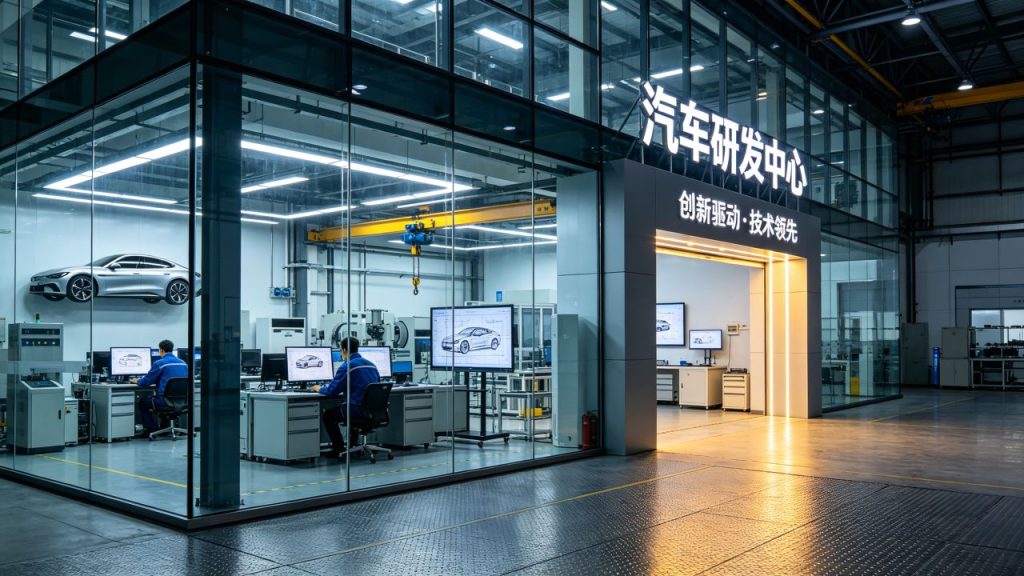
Europe Cuts, China Grows: Auto Parts Talent Rebalance | SunTzu China
Bosch global EBIT margin ~2%, China sales RMB149.8B, +4.9%. Tier-1 giants cut Europe jobs, expand China R&D: auto parts talent reset with HR playbook.
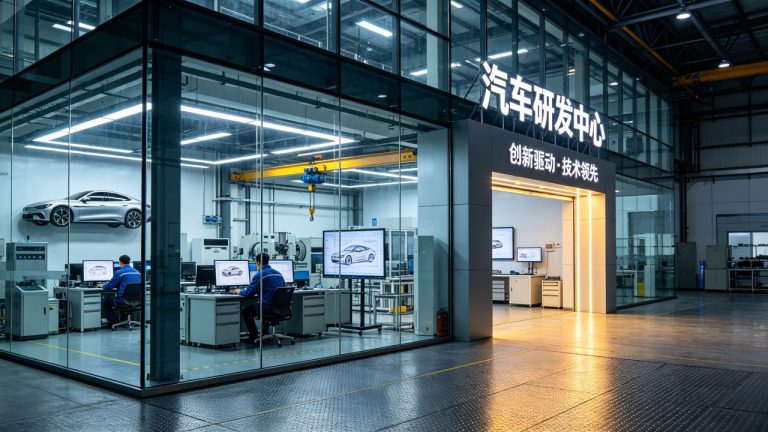
Bosch's global sales reached about EUR 91 billion in FY2025 with an EBIT margin of just ~2%. In the same financial report, Bosch China posted RMB 149.8 billion in sales, up 4.9% year-on-year. The most profitable market sits in China; the most pressured headquarters sits in Europe. And Bosch is not alone.
Executive Summary
Between 2025 and 2026, at least five of the world's top ten auto parts suppliers launched structural downsizing: Bosch cut roughly 1,200 jobs in its software and electronics division in Germany, ZF pulled forward 2,900 job cuts originally planned for 2030, and Continental spun off its automotive subgroup. In China, every one of them doubled down without exception (see the comparison table below).
This pulse report reads the "West Retreat, East Advance" story from a talent and compensation perspective — how the slimming-down at European headquarters is redrawing the global job map, how China is upgrading from a manufacturing base to an R&D hub, and what the traditional Tier-1 engineer faces at the crossroads of reskilling.
Three key judgments:
1. "West retreat, east advance" is not a slogan; it is in the financials. Bosch's global EBIT margin was only about 2%, while its China sales grew 4.9%. Continental's automotive subgroup saw global sales fall 4.3%, yet China contributed about 14% and is expected to remain the fastest-growing market for the next five years.
2. China's job structure is shifting from manufacturing to R&D. As giants divert manufacturing capacity to Southeast Asia, they are concentrating software, e-drive, and ADAS R&D functions in China. Demand is moving from process engineers to system engineers.
3. Mismatch is the biggest contradiction. At the 2026 China Auto Forum, the China Talent Research Society's Auto Talent Committee disclosed that companies have offered double salaries for three years and still cannot hire qualified ADAS algorithm engineers, while resumes from traditional mechanical and process majors pile up in inboxes.
1. The West Retreat: Slimming Down at European Headquarters
The root of the contraction lies in Europe itself: EV demand growth has slowed, while Chinese suppliers have entered the global supply chain at lower cost. Squeezed from both ends, European headquarters' cost pressure exploded in 2025.
Bosch, the world's largest automotive technology supplier, is the most signal-heavy case in this round of adjustment. In January 2026, Bosch announced it would cut about 1,200 jobs in its software and electronics division by end-2026, roughly 950 of them in Germany; it also plans to cut at least 1,500 positions at two German transmission plants. By FY2025, its global EBIT margin was just ~2% — a EUR 91 billion giant barely making money.
ZF's situation is more dramatic. As of the first half of 2025, ZF carried about EUR 10.6 billion in debt, with profits largely going to service it. In December 2025, ZF sold its ADAS business to Samsung for about EUR 12.4 billion in cash. Its original plan to cut 2,900 jobs by 2030 was pulled forward to before 2026, concentrated at its Saarbrücken plant in Germany, which employs about 9,000 people.
Continental chose the split route. Its automotive subgroup posted EUR 19.4 billion in sales in FY2024, down 4.3%; in September 2025 it was listed independently in Frankfurt under the name Aumovio, and 380 jobs at software subsidiary Elektrobit also appeared on the layoff list.
The table below summarizes the "west retreat" moves and the China-side moves of four giants:
| Company | Europe / US-side contraction | China-side moves |
|---|---|---|
| Bosch | ~1,200 jobs cut in software & electronics by end-2026 (950 in Germany); at least 1,500 at two transmission plants; global EBIT margin ~2% | China sales RMB 149.8B in 2025, +4.9% YoY; average annual investment in China ~RMB 6B |
| ZF | 2,900 job cuts pulled forward to before 2026 (Saarbrücken); ~EUR 10.6B debt; ADAS business sold to Samsung (~EUR 12.4B) | Asia-Pacific growth across multiple segments in H1 2025; China defined as "global growth engine" |
| Continental | Automotive subgroup FY2024 sales EUR 19.4B, -4.3%; 380 layoffs at Elektrobit; subgroup spun off as Aumovio | ~10,000 employees in China; ~14% of global sales from China in FY2024 |
| Valeo | — | Won 3 major orders in China, incl. active grille shutter for a leading NEV startup and a 5-in-1 integrated power electronics module |
Almost all of the layoffs have occurred on European soil; China is seeing business restructuring and job transformation rather than headcount cuts. The problem lies in weak European demand and the cost of transformation — not in China.
2. The East Advance: From Manufacturing Base to R&D Hub
The flip side of contraction is doubling down. In FY2025, Bosch China generated RMB 149.8 billion (about EUR 18.5 billion), up 4.9%, roughly one-fifth of the group's global sales. Bosch China President Xu Daquan put it bluntly: "China is the frontier of technological innovation." An average annual investment of about RMB 6 billion suggests this is more than rhetoric.
ZF China's business grew across segments in H1 2025 and was officially described by the group as a global growth engine. Continental's automotive subgroup has operated in China for three decades with about 10,000 employees; about 14% of its global sales came from China in FY2024, and internal forecasts see China growing faster than the global average over the next five years — the reason it still bets on China after the spin-off.
The shift in job structure is more telling than the shift in capital. For two decades, the multinational parts giants built their China presence around manufacturing: plants, production lines, process engineers. Today, incremental hiring demand is concentrated in three job families: software and electronic architecture, e-drive systems (battery, motor, control), and ADAS/chassis control. Take Valeo's 5-in-1 integrated power electronics module order in China: taking such a product from development and calibration to mass production requires a localized team of system engineers — positions that simply did not exist at foreign parts companies five years ago.
3. Talent Mismatch: Double Salaries vs. Piles of Resumes
Jobs are shifting, but people are not keeping up. Li Zhele, secretary-general of the China Talent Research Society's Auto Talent Committee, offered an observation at the 2026 China Auto Forum that surprised no HR director in the room: for the past three years, companies have offered double salaries and still cannot hire suitable ADAS algorithm engineers; e-drive and software architecture are all competing for people, while resumes from traditional mechanical and process majors fill inboxes.
The root of the mismatch is a broken demand curve. In 2026, NEV penetration in China's new-car market has exceeded 60% in some months; in 2025, NEV production and sales both surpassed 16 million units. The core components of the combustion-engine era — engines, transmissions, conventional chassis — face a certain decline in demand. And these are precisely the skill bands where foreign Tier-1 engineers are most densely concentrated.
Hence the "last-generation engine engineer" dilemma: a senior engineer with fifteen years of transmission calibration experience fully matches what European headquarters needs, but not what China's new positions require; and the software architects, domain controller engineers and e-drive engineers China needs are equally scarce in Europe. Layoffs do not reach China, but skills mismatch will silently eliminate a cohort of people.
Compensation tells the same story in two extremes: R&D roles at NEV makers and autonomous-driving companies pay significantly more than at traditional foreign Tier-1 suppliers, and top NEV players' per-capita R&D pay (including equity) can be several times that of legacy carmakers. Competing for software and ADAS talent with the old pay bands almost guarantees failure — this is a structural bandwidth gap, not a budget problem.
4. HR Recommendations
1. Turn "China growth" from a talking point into a budget line. When global downsizing plans land, China management should proactively negotiate with headquarters to take on R&D functions — using verified China growth data (the Bosch China +4.9% contrast) to win headcount and pay budget. Shift the hiring focus from manufacturing and process to e-drive, software and ADAS, and complete a critical-role talent inventory and external market benchmarking before Q4 2026.
2. Build a 90-day reskilling track for legacy engineers. For senior engineers in shrinking skill bands (transmissions, engines, conventional chassis), set a measurable path: days 1-30 complete foundational certification in e-drive or software; days 31-60 shadow a live project; days 61-90 own an independent module. Success is defined by delivering a working e-drive or domain-controller module, not by finishing courses. The training cost is far lower than the search fees and pay premium of hiring a new system engineer.
3. Benchmark against new EV players, not peers. When competing for software and ADAS talent, the reference set should be leading NEV makers and ADAS solution providers, not Bosch-vs-Continental or ZF-vs-Magna comparisons within the industry. Set a 15-20% pay premium band for critical roles and pair it with project bonuses and equity alternatives. Pure cash has a ceiling inside MNC pay systems, but project profit-sharing and global R&D rotations are cards that new players cannot match.
4. Run both talent pipelines simultaneously. Consultants at Sun Tzu China have observed, while serving foreign Tier-1 clients, that a two-way flow emerged in 2026: foreign companies' software and ADAS engineers are being poached by NEV players at premium pay, while manufacturing and process talent released by NEV downsizing flows back into foreign systems. HR should manage both pipelines at once rather than focusing only on external hiring.
For foreign Tier-1 suppliers, the "west retreat, east advance" story is ultimately a talent story. Headquarters cut; China hires — but the roles do not match one-to-one, and the skills gap is the real risk. SunTzu China supports foreign-invested clients in critical-role mapping, reskilling design and cross-pipeline talent acquisition, so that the China growth thesis is backed by a workforce that can actually deliver it.
Data Notes
- Data nature: Corporate financial figures and layoff information come from companies' official announcements and public financial reports; industry events and talent-market observations are drawn from public sources including Jiemian News, Yicai, TMTPost, CRI, Gasgoo, and public statements by the China Talent Research Society's Auto Talent Committee.
- Data currency: Financial data through FY2025 and H1 2026; layoff and business-adjustment information as of August 2026.
- Compensation basis: Compensation comparisons in this report are qualitative descriptions of industry trends, not fabricated sample statistics; actual pay varies significantly by company size, location, and individual profile.
- Limitations: This report is for reference only and does not constitute investment or compensation decision advice.
SunTzu China provides executive search and talent-rebalance advisory for foreign-invested automotive suppliers navigating China's R&D upgrade. Put the right engineers in the right roles as the market shifts.
Contact SunTzu China