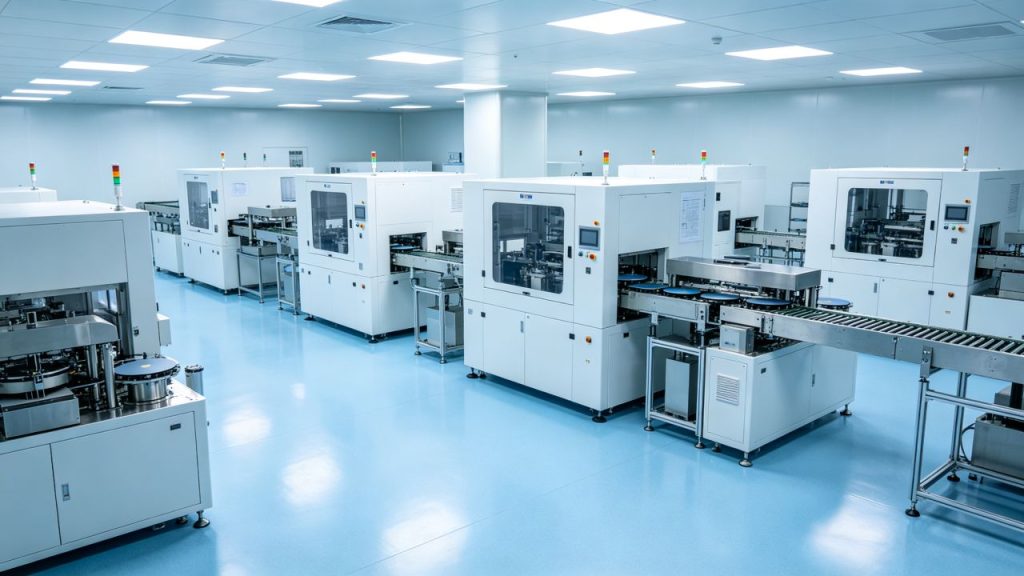
Order Boom, Talent Crunch: China Energy Storage Talent 2025-2026
Deep-dive on China energy storage talent landscape 2025-2026. Compensation data for battery R&D, BMS/EMS/PCS engineers, project managers, and overseas business heads. CATL and BYD vs foreign companies wage gap and hiring strategy analysis.
Executive Summary
China’s energy storage industry has crossed a critical inflection point. In 2025, new energy storage installations reached 66.43GW/189.48GWh, over 100% year-on-year growth — equaling the cumulative total of all prior years combined. Beneath this explosive growth lies an escalating talent war, with companies caught in a cycle of “order boom, talent crunch, and million-yuan salary raids.”
Senior technical professionals in energy storage now receive five to six offers simultaneously, with director-level annual packages exceeding RMB 1 million. One energy storage company founder publicly stated that “even RMB 3 million can’t hire a truly qualified expert.”
This report examines the talent landscape for energy storage in China, covering compensation benchmarks across 8 key roles, analyzing the talent competition between domestic leaders CATL and BYD versus foreign-invested enterprises, and the structural demand for compound-skilled talent in the overseas expansion wave.
1. Three Numbers Define the Boom
1.1 66.43GW: China’s Energy Storage Market Accelerates
According to Xinhua News Agency data, China’s new energy storage installations reached 66.43GW/189.48GWh in 2025, year-on-year growth exceeding 100%. This single year’s capacity addition equals the cumulative total of all prior years combined.
Globally, Energy-Storage.News reported that BESS (Battery Energy Storage Systems) monthly deployments exceeded 17GWh in February 2026, projecting annual deployment surpassing 200GWh. China dominates this landscape — CATL, BYD, Hithium, Sungrow, and other Chinese companies hold six of the top ten spots in global energy storage battery shipments.
1.2 3 Million: The Talent Gap Consensus
Industry estimates place the energy storage talent gap at 2-3 million people. The most acute shortage is not entry-level operators but R&D engineers, system integration engineers, and overseas project managers with 3+ years of experience.
This gap has been building through three waves since 2020. Wave one (2021-2022): policy-driven energy storage station installation surges created demand for project managers and field engineers. Wave two (2023-2024): massive battery production capacity expansion by CATL, BYD, CALB, and Gotion drove demand for cell R&D and process engineers. Wave three (2025 onward): the overseas expansion wave created urgent demand for international business leaders and globally-capable talent.
Each wave pushed compensation higher. A senior engineer who has completed a full energy storage system integration project receives 5-8 times more resume views on job platforms than a comparable traditional industry engineer.
1.3 30-50%: The Salary Jump Premium
Compensation jumps for energy storage talent switching jobs now reach 30-50%, far exceeding the 15-20% average for the broader new energy sector. A cell R&D engineer with three years at CATL can achieve a near-doubled salary by moving to a competitor. This premium reflects both the sector’s explosive growth and the extreme scarcity of qualified professionals.
2. Key Role Compensation Benchmarks (2025-2026)
The following compensation data is estimated based on industry salary surveys, executive search firm transaction data, and public recruitment information. Actual figures may vary by company size, technology segment, and individual profile.
Role | Junior (3-5 yrs) | Senior/Manager (5-10 yrs) | Director/Head (10+ yrs) |
Battery R&D Engineer (Cell/Materials/Electrolyte) | RMB 250-450K | RMB 550-900K | RMB 1.0-2.0M |
Energy Storage System Engineer (BMS/EMS/PCS) | RMB 220-400K | RMB 480-800K | RMB 900K-1.5M |
Energy Storage Project Manager/Field Engineer | RMB 180-300K | RMB 350-600K | RMB 700K-1.2M |
Energy Storage Sales/BD Director | — | RMB 400-800K | RMB 800K-2.0M |
Overseas Energy Storage Business Head | — | RMB 600K-1.0M | RMB 1.2-2.5M |
Sodium-Ion/Solid-State Battery Scientist | RMB 300-550K | RMB 600K-1.1M | RMB 1.2-2.2M |
Power Electronics Engineer (PCS/Inverter) | RMB 200-350K | RMB 400-700K | RMB 800K-1.3M |
Energy Storage Quality/Reliability Engineer | RMB 150-280K | RMB 300-550K | RMB 600K-1.0M |
Compensation Insights:
Battery R&D engineers and energy storage system engineers command the fastest salary growth. The reason is straightforward: capacity expansion has outpaced the talent pipeline. CATL’s R&D workforce exceeded 20,000 in 2025, while BYD hired over 40,000 new graduates and technical staff in 2024-2025, further inflating industry-wide labor costs.
Overseas energy storage business heads command total packages of RMB 1.2-2.5M, among the highest compensation ceilings in the sector. Candidates who simultaneously possess energy storage technical expertise, overseas project delivery experience, and English business fluency number fewer than 200 nationwide. These professionals must navigate overseas certifications (UL, IEC), local regulatory compliance, and international EPC project delivery — a triple capability stack that is exceptionally difficult to develop and recruit.

3. Talent Supply-Demand Dynamics: Domestic Dominance
3.1 The CATL and BYT Talent Vacuum Effect
China’s energy storage talent landscape is largely defined by two companies. CATL’s R&D headcount exceeded 20,000 in 2025, while BYD hired 40,000+ recent graduates and technical staff in the same period. Their combined recruitment scale exceeds that of all foreign energy storage companies in China combined.
This scale effect gives domestic leaders absolute pricing power in compensation. A cell engineer with three years of experience at CATL earns RMB 350-450K annually. The same candidate moving to a foreign energy storage company would typically receive RMB 250-350K — a 30-40% gap. Including CATL’s performance bonuses and project incentives, the total compensation gap reaches 40-50%.
However, high compensation has tradeoffs. CATL’s work intensity is legendary in the industry. In 2024, founder Zeng Yuqun announced an RMB 8.1 billion dividend while the company simultaneously faced public scrutiny over its intense overtime culture.
Sun Tzu China observed in client work with a foreign energy storage company that candidates leaving CATL experience significant culture shock regarding work expectations. One candidate who moved from CATL summed it up: “At CATL, 70-hour weeks during project peaks were normal. At the foreign company, I discovered that overtime could actually be converted into compensatory leave.”
3.2 The Second Tier
Beyond CATL and BYD, Sungrow, Hithium, Gotion High-Tech, and EVE Energy are accelerating their own talent acquisition. Sungrow, ranking second globally in energy storage system shipments, added over 3,000 technical positions at its Hefei headquarters in 2025. Hithium recruited core technical talent from CATL, using a “15-20% above CATL” compensation strategy at its Xiamen headquarters. These second-tier players intensify competition — candidates no longer face only the binary choice between “CATL or a foreign company.”
3.3 Differentiated Strategies for Foreign Enterprises
Foreign energy storage companies in China face three strategic paths.
Path one: technology moat products. Tesla competes via brand premium and technology maturity with its Megapack, but the Shanghai Megapack factory’s 2025 launch created surging demand for local R&D and project management talent. Tesla China’s energy storage team compensation sits between “CATL level” and “traditional foreign company level,” with equity compensation providing competitive total packages.
Path two: overseas market synergy. Fluence, Wärtsilä, and Samsung SDI maintain relatively small China energy storage teams (several dozen to a few hundred people). But these companies serve as the best talent source for Chinese energy storage companies going global — their engineers already understand overseas certification and international project delivery processes.
Path three: niche market focus in China. Examples include ABB’s localized PCS R&D team and Siemens’ engineering services for energy storage EMS systems. These foreign companies offer lower compensation but greater business stability and access to global technology platforms.
4. Overseas Expansion: Structural Shortage of Compound-Skilled Talent
Chinese energy storage companies are accelerating global expansion. CATL operates factories in Hungary, Germany, and Indonesia. BYD storage products have entered over 80 countries. Sungrow’s energy storage project deliveries in Southeast Asia and the Middle East are growing rapidly.
But the faster the expansion, the wider the talent gap. An overseas energy storage project manager needs three concurrent capabilities: energy storage solution design, international EPC project delivery experience, and English plus second-language proficiency (Spanish, Arabic). According to industry headhunters, fewer than 100 candidates nationwide meet all three criteria.
Industry data shows recruitment demand for overseas energy storage roles grew over 150% year-on-year in 2025, while qualified candidate supply grew less than 20%. This imbalance pushed compensation for overseas energy storage business heads up 40-60% within a single year.
The shortage also varies by target market. Chinese energy storage companies target markets from the Middle East and Southeast Asia to Europe, Latin America, and Africa. Each market demands different capabilities: Middle Eastern markets value EPC delivery and high-temperature adaptability; European markets prioritize certification compliance and grid integration; Southeast Asian markets emphasize cost control and local supply chain management. Professionals capable of covering multiple markets simultaneously likely number fewer than 50 nationwide.
—
5. Hiring Strategy Recommendations
Strategy one: differentiate through technical depth and global platform. Domestic companies offer higher pay but also higher intensity and shifting technical directions. Foreign energy storage teams offer more comprehensive technical systems and clearer long-term career paths, remaining attractive to senior technical candidates. Tesla Shanghai’s Megapack factory demonstrates that a stable R&D environment with a clear technology roadmap can be more persuasive to certain candidates than an additional RMB 200K annually.
Strategy two: target returnees from overseas assignments. A notable 2025 trend: some professionals dispatched overseas by Chinese energy storage companies, after completing their project assignments, prefer to return to China but stay within a foreign company system. These professionals combine Chinese execution efficiency with international perspective, making them ideal candidates for foreign energy storage teams. A Middle East energy storage project typically runs 18-24 months — the post-project window offers prime recruitment timing.
Strategy three: secure solid-state battery talent early. Solid-state battery commercialization is accelerating, with 2026-2027 as the critical window. Globally, fewer than 5,000 professionals have substantive solid-state R&D experience, and fewer than 500 possess production process expertise. Sun Tzu China recommends foreign companies that secure positions in this talent pool early will gain a significant advantage in next-generation energy storage technology competition.
Strategy four: build internal training systems. The energy storage industry’s compound-skilled talent shortage cannot be fully resolved through external hiring. Foreign companies should establish internal rotation programs for energy storage system engineers, allowing power electronics engineers to work with battery management systems and software engineers to understand cell characteristics. Cross-functional rotation requires 6-12 months to show results, but the long-term cost is lower than external hiring premiums and turnover losses.
—
6. Outlook: 2026-2027
Trend one: the overseas talent battle goes global. Chinese energy storage companies’ global hiring needs will expand talent competition from China to Europe, Southeast Asia, and the Middle East.
Trend two: sodium-ion battery commercialization will create new demand. CATL and BYD have entered mass production for sodium-ion batteries, driving demand for cathode/anode material and electrolyte R&D talent.
Trend three: energy storage safety talent becomes a growth sector. Following increasing energy storage station fire incidents, demand for thermal management engineers and system safety design professionals will rise significantly.
—
Data Sources and Disclaimer
Compensation data in this report is estimated based on industry salary surveys, executive search firm transaction data, and publicly available recruitment information. Actual figures may vary significantly by company size, technology segment, and individual candidate profile. Energy storage installation data sourced from Xinhua News Agency’s 2025 China new energy storage development report. Global BESS deployment data sourced from Energy-Storage.News. Talent gap estimates are based on industry consensus and professional judgment. This report is provided for reference purposes only.