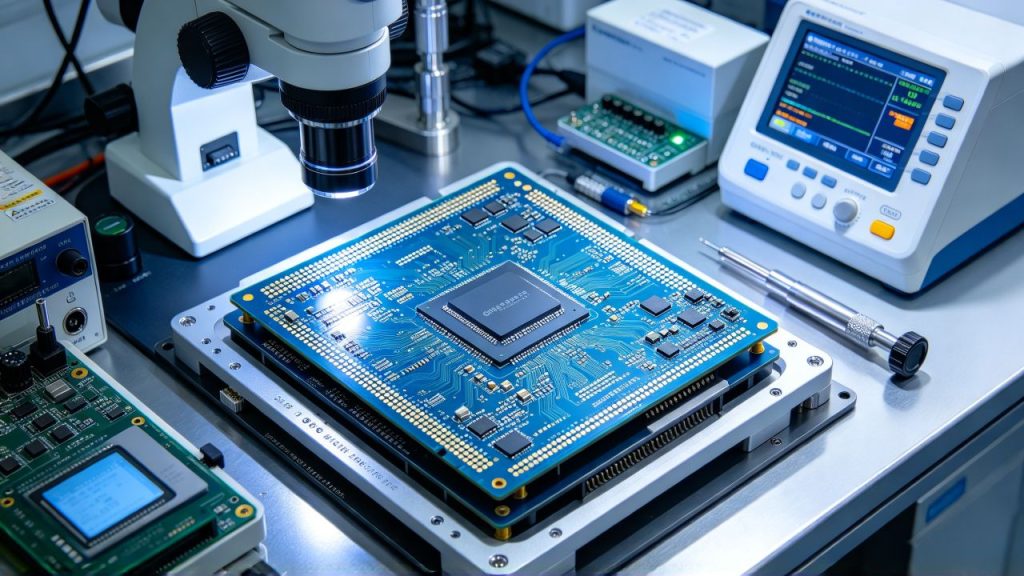
China Battery Jobs Move to Second-Tier Plants
China's battery market share is slipping from CATL and BYD to second-tier plants. Where the jobs moved, what they pay, and which plants to target.
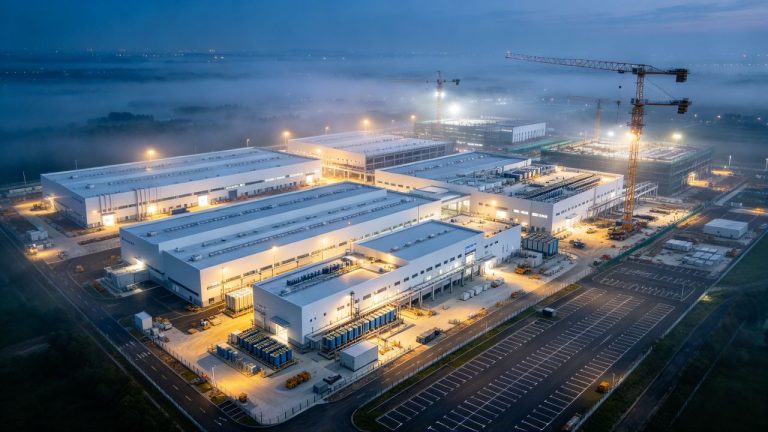
Power Battery Talent Research · Monthly Ranking Brief
In September Sunwoda edged past Rept Battero for sixth place. It is one line in a monthly ranking, and it marks where the hiring has already moved. This brief reads the ranking for who is adding people, what those plants pay, and which of them a foreign buyer should treat as a real option.
Published by SunTzu China | Data as of 21 October 2026
Source tiers: China Automotive Battery Innovation Alliance monthly data / listed-company annual reports and sustainability reports / company recruitment notices and live postings / mainstream financial media
Coverage: cell manufacturing, pack assembly, equipment, process and quality functions across the top fifteen installers
The battery sourcing lead at a European carmaker keeps two lists. One is approved suppliers, which now includes three Chinese plants outside the top two. The other is the monthly installation ranking, and in September it moved: Sunwoda took sixth place from Rept Battero by 0.07GWh, a margin small enough to be rounding and large enough to change a slide. Her question is not who won the month. It is whether the plants now taking share can staff the lines behind it, what those people cost, and how long she has before the price changes.
This brief answers those three questions in order. It starts with why the share moved and where it stopped, then looks at who these plants are hiring and what they pay, and closes on the timing and the boundary of what the data can support. Figures come from the alliance's September release, three listed-company annual reports and recruitment notices from plants that are currently building lines. It is written for buyers and employers outside China who are deciding whether a second-tier plant is a supply option or a staffing competitor. China battery hiring has become a question of which plant, and the answer changes with plant age.
CATL and BYD market share fell 1.87 points year on year, and the slide stopped near the tenth place. On summed company shares the two held 62.01% in September and the top ten held 94.65%, a gain of 0.14 points on that basis and a fall of 0.2 points on the alliance basis. The narrow reading is that the duopoly loosened and the top ten did not. Not one point of that released share reached the tail: the number of plants recording installations fell to 31 from 35 a year earlier.
Second-tier battery plants are no longer a hedge. EVE Energy holds a nomination from BMW for a 48V system and supplies the top trim of the new iX3 with large cylindrical cells; Gotion ships cells into Volkswagen's overseas vehicles and has three joint-venture sites with VW in Spain, Slovakia and Morocco; Sunwoda's Hungarian plant is due to start in 2026. A second-tier plant in China is now a nominated supplier to a European programme, with the audit trail and the headcount that implies.
Their engineering is built for yield, not for papers. EVE Energy employs 6,597 research staff, 21.14% of its workforce, and only 71 of them hold a doctorate, while 1,244 hold a vocational qualification or below. Sunwoda added 22.85% more research staff in a year to reach 10,306, and more than nine in ten of them are under forty. The profile that gets hired is the one who can hold a coating window and a formation schedule, not the one who can publish on electrolyte chemistry.
The battery process engineer salary band follows plant age rather than company size. A cell process engineer at a plant that started production in October 2025 is posted at RMB 8,000-18,000 a month; the same title at an established plant, with five to ten years asked for, is posted at RMB 14,000-25,000 on fourteen months. A supervisor one grade up reaches RMB 15,000-25,000. The variable that moves the number is whether the line is still being commissioned.
What a foreign employer can use directly: cell process engineers at RMB 8,000-18,000, process supervisors at RMB 15,000-25,000, equipment engineers at RMB 8,000-14,000 and equipment supervisors at RMB 10,000-20,000, all from one greenfield plant's recruitment notice; established plants post senior process and equipment roles at RMB 14,000-25,000 on fourteen months. Three headcount figures frame the market: 31 plants installed cells in September, down four year on year; Gotion added 29.37% more employees in 2025; EVE Energy added 4.06%.
Data window: 2025 annual reports to 21 October 2026 | Sample: one alliance monthly release covering September 2026, three listed-company annual reports and one sustainability report, four plant recruitment notices, and financial media reports on nominations | Excluded from evidence: aggregator salary distributions by job title, self-media share estimates, and any institute forecast of battery talent gaps | Nature: observational, not sampled; conclusions cover the sample only.
I. Why the Share Moved Down, and Where It Stopped
The market grew in September and got less concentrated at the same time. Domestic installations reached 87.2GWh, up 10.4% month on month and 14.7% year on year, a record for the year. Lithium iron phosphate took 74.5GWh or 85.5% of it, up 19.9% year on year, while ternary cells fell 10.9% to 12.3GWh. Chemistry is not the variable that matters for hiring, but it explains which plants gained. Lithium iron phosphate battery talent is the largest pool in this market. The plants qualified on commercial vehicles and entry models were the ones that moved up in September.
Two sets of concentration figures circulate, and they do not agree, so the difference has to be stated before anything is built on it. The alliance publishes 61.7%, 80.0% and 94.2% for the top two, five and ten, calculated as installed volume over total volume. Adding the published company shares instead gives 62.01%, 80.39% and 94.65%. The gap comes from the denominator: company shares in the ranking table are struck against roughly 86.7GWh, not the 87.2GWh headline, which is why CATL's 35.49GWh reads as 40.92% rather than 40.70%. Neither figure is wrong and neither is used against the other in this brief.
The year-on-year direction differs between the two, and that is the more useful finding. On the summed-share basis the top ten rose 0.14 points; on the alliance basis the top ten fell 0.2 points. Both are small enough to sit inside the arithmetic, so no directional claim is made here. What is not ambiguous is the top two: they fell 1.87 points, and the net effect landed between third and tenth place rather than in the tail.
The consolidation story is at the bottom of the table, not the top. Thirty-one plants recorded installations in September against 35 a year earlier, and 41 plants recorded any installation in the first nine months against 50 a year earlier. Nine exits in nine months, while the top fifteen took 98.67% of the market. For a buyer this is the relevant structural fact: the shortlist is shrinking at the bottom while the middle is getting crowded.
Why these plants rather than the top two is a question of what a carmaker is buying. CATL and BYD both sell against allocation, and both price from a position of scarcity; a European programme that wants a second source on a fixed specification is often better served by a plant that will accept the customer's cell design, the customer's bill of materials and a schedule built around one model. Gotion took the Volkswagen route through equity rather than procurement, which locks the relationship in a way a supply contract does not. EVE Energy took a 48V system nomination first and the top-trim cylindrical supply second, entering at the low-voltage end where the specification is settled and the volume is predictable. The plants that gained share in September are the ones that said yes to terms the top two would not sign.
The table below sets the September ranking against the nine-month cumulative one, because a single month reorders the middle of the table while the cumulative column shows which of those moves is durable.
| September rank | Company | September GWh | September share | Nine-month rank | Nine-month share |
|---|---|---|---|---|---|
| 1 | CATL | 35.49 | 40.92% | 1 | 44.16% |
| 2 | BYD | 18.29 | 21.09% | 2 | 18.53% |
| 3 | CALB | 6.04 | 6.97% | 3 | 6.44% |
| 4 | EVE Energy | 5.03 | 5.80% | 5 | 5.39% |
| 5 | Gotion High-Tech | 4.87 | 5.61% | 4 | 6.07% |
| 6 | Sunwoda | 3.24 | 3.74% | 7 | 3.09% |
| 7 | Rept Battero | 3.17 | 3.65% | 6 | 3.47% |
| 8 | Jiyao Tongxing (Geely joint venture) | 2.39 | 2.75% | 9 | 2.46% |
| 9 | Zenergy | 1.87 | 2.15% | 8 | 2.54% |
| 10 | SVOLT | 1.71 | 1.97% | 10 | 1.96% |
Table 1: September 2026 and nine-month cumulative installations for the top ten. Units are GWh and percentage share, as published in the alliance release of 15 October 2026 and reproduced in financial media. Ranks eleven to fifteen were LG Energy Solution, Yinpai, Chuneng, Deyi and Zhongqi New Energy in September; their combined share was 4.02 percentage points. The nine-month column comes from the same release. Shares are stated as published and are not recalculated here. Data window: September 2026 and January to September 2026.
A single month swapping sixth and seventh is not a trend, but the cumulative column explains why it was possible. Sunwoda still trails Rept Battero over nine months, 17.77GWh against 19.91GWh, so the September move came from Sunwoda's own shipment growth, with 2025 cell shipments up 68.92% to 42.72GWh, rather than from Rept Battero losing ground. The plants that gained in September grew into the ranking rather than taking share from a falling competitor.
Customer structure explains the divergence better than technology does. Sunwoda supplies extended-range models for Li Auto and Seres and takes a large share of Xiaomi programmes. Gotion's tie to Volkswagen is equity as well as contract, with three joint-venture sites outside China. EVE Energy's route runs through BMW's large-cylindrical programme and through storage, which already absorbs the swings in the car market. Different customers mean different manufacturing requirements, and that is what should decide which of these plants a foreign buyer approaches.
Headcount tells a different story from share, and the gap between them is where a hiring plan gets made. Gotion added 29.37% more employees in 2025, the fastest of the three, and ended with 33,087. EVE Energy added 4.06% to reach 31,213 while holding a slightly larger September share than Gotion. Revenue per employee separates them further: RMB 1.97 million at EVE against RMB 1.36 million at Gotion. More people did not buy more share at these plants; a narrower product programme did.
The table below puts three of these employers side by side, with the workforce, research headcount and research intensity against the installation share each of them holds.
| Company | Employees 2025 | Change | Research staff | Research share | Research spend | September share |
|---|---|---|---|---|---|---|
| Sunwoda | 63,696 | Not disclosed in headcount terms | 10,306 | 16.18% | RMB 4.38bn, 6.92% of revenue | 3.74% |
| Gotion High-Tech | 33,087 | +29.37% | Not separately disclosed | Not disclosed | Not disclosed | 5.61% |
| EVE Energy | 31,213 | +4.06% | 6,597 | 21.14% | RMB 3.44bn, 5.59% of revenue | 5.80% |
Table 2: workforce and research intensity at three second-tier installers, 2025 disclosures. Sunwoda's total includes consumer battery operations and is therefore not comparable with the other two on a per-employee basis. Research share is research staff divided by total employees as disclosed. Research spend is the company's reported figure for 2025 and is not a staff cost. Gotion does not disclose research headcount separately in the material reviewed, so the cell is left empty rather than derived. Data window: full-year 2025. Sources: company annual reports and Sunwoda 2025 sustainability report.
Battery research headcount separates them along a line that matters for recruitment. EVE Energy runs 6,597 research staff, 21.14% of its workforce, with a doctorate count of 71, and 1,244 research staff at vocational level or below. That is an engineering department organised around product iteration, and it prices people accordingly. Sunwoda's 16.18% sits lower and its research spend is up 31.49% in a year, which reads as a department still being built rather than one being optimised.
II. Who These Plants Are Hiring, and What They Pay
Battery cell manufacturing jobs sit in five functions, and the map is the same at every plant in the top fifteen. Cell process engineering across mixing, coating, rolling, slitting and stacking. Equipment engineering for the same stations, which in practice carries the yield work. Pack process and pack equipment. Quality engineering, split into incoming, in-process and customer quality. And a thin layer of cell research above them. Everything below that is operator and team leader, and it is hired locally in volume.
Plant age sets the price, and the effect is larger than the difference between companies. The clearest paired evidence comes from two plants hiring the same functions this quarter. A subsidiary of Gotion that began operations in October 2025 posts cell process engineers at RMB 8,000-18,000, cell equipment engineers at RMB 8,000-14,000, and process supervisors at RMB 15,000-25,000. An established plant in the same industry posts senior process and equipment engineers at RMB 14,000-25,000 on fourteen months for five to ten years of experience.
The table below collects the posted bands, keeping greenfield and established plants in separate rows so the comparison is not read across them.
| Plant type | Role | Requirement | Monthly band | Months |
|---|---|---|---|---|
| Greenfield, from October 2025 | Cell process engineer | Bachelor, technology or chemistry | RMB 8,000-18,000 | Not stated |
| Greenfield, from October 2025 | Cell process supervisor | Bachelor, team lead | RMB 15,000-25,000 | Not stated |
| Greenfield, from October 2025 | Cell equipment engineer | Bachelor, 2+ years in lithium cells | RMB 8,000-14,000 | Not stated |
| Greenfield, from October 2025 | Equipment supervisor | Bachelor, IATF16949, VDA6.3 preferred | RMB 10,000-20,000 | Not stated |
| Established plant | Senior process engineer | Vocational diploma, 5-10 years | RMB 14,000-25,000 | 14 |
| Established plant | Senior equipment engineer | Vocational diploma, 3-5 years | RMB 14,000-25,000 | 14 |
| Established plant | Process quality engineer | Vocational diploma, 3-5 years | RMB 14,000-19,000 | 14 |
Table 3: posted monthly bands for battery process, equipment and quality roles at Chinese cell plants, September to October 2026. Greenfield rows come from one recruitment notice for a plant that began operations in October 2025; established-plant rows come from live postings at a plant in Sichuan. Bands are as posted and exclude overtime, shift allowance, housing and year-end bonus. A vocational diploma is a three-year college qualification, below a bachelor's degree. The two groups are not compared like for like and are shown separately for that reason. Data window: September to October 2026.
Battery equipment engineers are priced on machine time, and a vocational diploma is enough at the top of that ladder, which is the least expected line in the table. The senior equipment and process roles at RMB 14,000-25,000 ask for a three-year college qualification and three to five years on the same equipment, not a degree. Battery equipment work is learned on machines, and the plants price it that way. A foreign employer writing a bachelor's requirement into the job description removes most of the available pool before the first interview.
Quality is the function that splits most cleanly, and the split matters for a foreign employer writing a requisition. Incoming quality owns supplier and material acceptance. In-process quality owns the defect escapes on the line and carries the daily yield meeting. Customer quality owns the 8D reports and the audits that a nominated programme brings, which is the role a European customer will actually meet. One live posting in this sample makes the distinction concrete: a process quality engineer at RMB 14,000-19,000 on fourteen months, asking for a vocational diploma with three to five years and experience of automotive quality systems. That is the customer-facing role, and it is priced like a technician rather than a manager.
Where the money goes instead is shift tolerance and line ownership. Every posting in this sample states or implies shift cover, and the plants that pay above RMB 20,000 are buying someone who has taken a line through commissioning, not someone who has studied the chemistry. That is also why the greenfield plants pay a wider band: they are hiring for a line that does not yet run at rate, and the upper half of the band is the price of the first person who can make it run.
For a foreign employer, this is the useful asymmetry. These plants hold the largest pool of people in China who have actually commissioned a cell line, and they sit below the top two on pay. What they do not hold is depth in next-generation chemistry: with 71 doctorates across a research organisation of 6,597, the work is product iteration rather than materials discovery. Talent for a solid-state or electrolyte programme still sits at CATL, at BYD, and in universities, and it does not come out of a second-tier plant at any price.
III. When to Move, and What Changes the Price
Battery plant expansion in China has moved offshore, and that sets the calendar. Gotion's Slovak site targets trial production in 2026 with 20GWh in phase one; Sunwoda's Hungarian plant is due in 2026; EVE Energy's 30GWh Hungarian cylinder plant follows in 2027 next to BMW's site. Each of those projects needs a small number of people who can move a Chinese line discipline into a European plant, and that number is the binding constraint, not the headcount total.
The people who can do it are scarce in a specific way. They come from two backgrounds: engineers who have already supported an overseas site for a Chinese plant, and process managers who have run a line through a European audit. The first knows the process and not the labour framework; the second the reverse. Neither is available in volume, and the plants that are opening sites in 2026 began assembling these teams in 2024. A foreign employer entering the same market for the same people is competing against a two-year head start.
What a European site asks of these people is a specific and short list. Process discipline is the easy part: a Chinese line engineer who has taken a coating station from commissioning to rate carries the method with them. The harder requirements are a working command of the local language of the shop floor, enough regulatory fluency to sit through a customer audit without translation, and a willingness to hold a two-year posting with a rotation home. Plants that have run a European project already screen on the second of those, because an audit that stalls on documentation costs a quarter of the schedule. Plants that have not are still learning it, which is why the pool of people with both the process record and the audit experience is smaller than the pool with the process record alone.
Consolidation at the bottom will release people, but not the ones a buyer needs. Nine plants left the installation table in nine months, and when a small plant closes a line the people who become available are operators, shift leaders and maintenance technicians. Process engineers with commissioning experience move to another plant before the closure is announced. The exits therefore add supply at the bottom of the skill ladder and almost none at the middle.
The price will change in two steps, and both are visible in advance. Maturity is the slower one: a band posted at RMB 8,000-18,000 for a greenfield plant still in commissioning moves toward the established range once the line runs at rate, because the work stops being a project and becomes a shift. Product generation moves faster: experience with 46-series large cylindrical cells, or with high-nickel and silicon-carbon systems, is priced above the generic process band, because only a few lines in China have run those combinations to automotive yield. Neither step shows up in a monthly ranking, and both show up in recruitment notices.
The limitations here are specific. The concentration figures exist in two versions with different denominators, and the year-on-year direction of the top ten reverses between them, so this brief declines to claim a direction. Sunwoda's headcount includes consumer battery operations and cannot be read per employee against the other two. Gotion does not disclose research headcount in the material reviewed, which removes the single most useful comparison in Table 2. And the posted bands come from recruitment notices, which state the range the employer is willing to publish rather than what it pays.
Four indicators are worth tracking from here, and each is public and moves before a hiring decision has to be made. The count of plants recording installations, published monthly, tracks consolidation. The top-two share on the alliance basis tracks whether the duopoly is still loosening. The number of overseas sites entering trial production tracks demand for people who can move a line abroad. And research headcount at the second-tier plants tracks whether they are building engineering depth or only capacity.
Executive search battery industry mandates fail on the wrong plant list more often than on pay. The shortlist and the talent pool overlap but are not the same. The plants worth qualifying as suppliers are the ones with a nominated European programme and a commissioned line, which in this sample means EVE Energy, Gotion and Sunwoda. The people worth hiring are not necessarily at the same three: the deepest process bench sits at the plants that have run the most lines, and the deepest chemistry sits at the top two. Treating the ranking as a talent map will send a search to the wrong six plants.
Nature of data: this brief reads public information and contains no internal headcount or pay data. Concentration percentages are quoted as published by two sources with different denominators and are never recalculated against each other. Posted pay bands are employer-stated ranges and are not estimates of actual pay.
Sources: 1) China Automotive Battery Innovation Alliance, September 2026 monthly battery data, released 15 October 2026 (installations, concentration, plant count; tier A); 2) Sunwoda 2025 annual report and 2025 sustainability report (revenue, net profit, 63,696 employees, 10,306 research staff, research spend; tier A); 3) EVE Energy 2025 annual report (revenue, net profit, 31,213 employees, 6,597 research staff, research spend, doctorate and vocational breakdown; tier A); 4) Gotion High-Tech 2025 annual report (revenue, net profit, 33,087 employees, revenue per employee; tier A); 5) recruitment notices from a Gotion subsidiary plant and live postings at an established Sichuan plant (posted bands; tier A-minus, employer-stated); 6) financial media reports on the BMW 48V nomination, Volkswagen overseas deliveries and the Spain, Slovakia and Morocco joint ventures (tier B); 7) installation ranking table with company shares, as reproduced by financial media from the alliance release (tier B).
SunTzu China
Executive search for advanced manufacturing, new energy and robotics. All figures cited come from public sources and do not constitute investment advice. Pay bands are employer-stated ranges, and any individual offer rests on the employer's own assessment.