
CR New Energy RMB 24.5B IPO: Talent Map
CR New Energy’s RMB 24.5B IPO surged 178% on listing. Our talent map covers wind, solar, storage & hydrogen roles with salary ranges and HR hiring checklist.
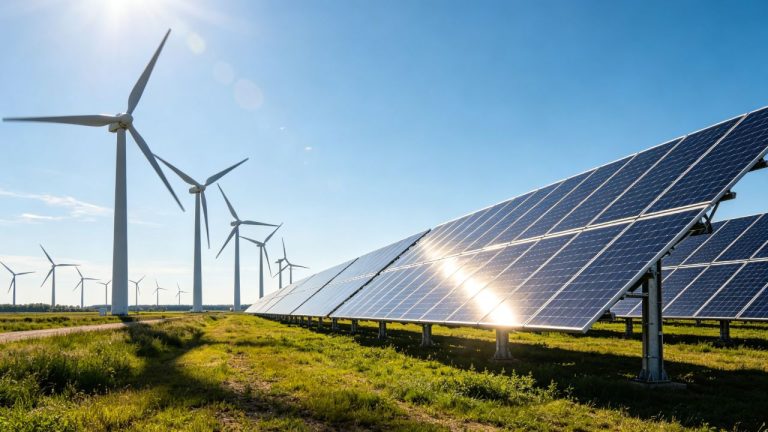
CR New Energy RMB 24.5 Billion IPO: China's New Energy Talent Market Enters the "State-Owned Era"
1. CR New Energy IPO: Decoding RMB 24.5 Billion in Six Numbers
CR New Energy Holdings Co., Ltd. has officially listed on the Shenzhen Stock Exchange Main Board (Ticker: 001248), becoming the third state-owned new energy operator to go public on the A-share market, after China Three Gorges Renewables and Huadian New Energy. The key IPO metrics are laid out below:
What matters above and beyond the headline numbers is the SOE spin-off logic underpinning the deal. CR New Energy is the carved-out new energy operation platform from China Resources Power (HKEx: 00836). Before it, China Three Gorges Corporation spun off its renewables unit for a Shanghai listing in June 2021, followed by China Huadian's new energy arm in July 2025. PowerChina's new energy subsidiary is still in the pipeline. Three of China's "Big Five" power generation groups have now completed or initiated new energy asset spin-offs. As one institutional investor who participated in the CR New Energy IPO roadshow told the media: "Investors aren't pricing the existing 18.5 GW installed base. They're pricing the commitment to double capacity within three years."
The wave of SOE new energy spin-offs is not merely a capital markets story—it is a talent-signal transmission chain. Every state-owned new energy company listing means tens of billions of yuan injected into new project construction. Every new project launch means a full-chain surge in hiring demand, from project development and technical engineering to operations & maintenance. The 7.175 GW of new capacity that CR New Energy's IPO proceeds will fund is, in essence, a talent purchase order being translated into recruitment requisitions. More critically, post-listing, CR New Energy's headcount is expected to expand by 30–50%—this is not a forecast but the inevitable consequence of RMB 24.5 billion hitting the ground.
2. Capacity Up, Profits Down: New Energy's "Volume-Price Paradox"
CR New Energy's prospectus exposes a predicament shared across the entire industry: installed capacity is expanding at breakneck speed, while profits are shrinking. From 2023 to 2025, the company's capacity grew 64%, yet net profit attributable to the parent fell from RMB 8.28 billion to RMB 6.10 billion—a decline of 26.3%. Q1 2026 net profit dropped another 31% year-on-year.
This "industry growth outpaces profitability" dynamic has a direct parallel in the talent market—revenue is soaring, capacity expansion plans are multiplying, yet talent supply consistently lags behind. A 2026 Securities Times report flagged a "structural rupture between new energy industry revenue growth and talent supply."
The root cause of the "volume-price paradox" lies in a deep shift in the industry's operating logic:
- Subsidy phase-out accelerates: The company's renewable energy subsidy revenue as a share of total revenue has already fallen from 31.59% in 2023 to 17.35% in 2025. Document No. 136 has formally declared the end of the subsidy era, pushing new energy fully into market-based competition.
- Electricity prices under sustained pressure: The national unified electricity market framework continues to advance, with spot market construction accelerating. Wind and solar plant electricity prices face long-term structural downward pressure.
- Competitive landscape intensifies: Central SOEs, provincial SOEs, private enterprises, and cross-sector entrants are all vying for premium project resources, driving up acquisition costs across the board.
Yet CR New Energy's operational efficiency remains an industry benchmark—wind average utilization hours reached 2,307 hours (16.6% above the national average), solar reached 1,295 hours (19% above the national average), with overall gross margins holding at 48.8%. This suggests that in an industry where volume is rising but prices are falling, operational efficiency will become the core variable determining both corporate survival and talent attractiveness.
The impact of the subsidy phase-out on the talent market is structural. In the subsidy era, the core competency was "land-grabbing"—whoever secured wind/solar project approvals, land rights, and grid connections made money. The most valuable talent was in project development, government relations, and grid coordination. In the market-based era, the core competency shifts to "operational optimization"—whoever generates more electricity at lower cost survives. Talent demand is accelerating its pivot from front-end development roles to back-end operations and technology-enabled functions. Smart O&M engineers, digital dispatch specialists, storage configuration optimizers, and electricity trading strategists—salary growth for these roles will far outpace traditional project development positions.
3. The Three-Pronged Battleground: China's New Energy Talent Competition Map
China's new energy talent market is coalescing into a three-pronged competitive landscape. Understanding this map is a prerequisite for any HR team to formulate an effective recruitment strategy.
Tier 1: Central & Provincial State-Owned Enterprises — Stability Meets Reform
Led by CR New Energy, China Energy Group, CGN, and China Three Gorges Renewables, central SOEs command the absolute lion's share of China's new energy power generation assets. Their common traits: rigid compensation systems constrained by SASAC total payroll caps, yet unmatched job stability and resource endowments. CR New Energy's provincial subsidiaries face a textbook dilemma: hiring a single wind farm site manager requires navigating a three-tier approval chain—group, provincial company, project company—with the average time from resume screening to offer extending 3–6 months. But the post-listing independent board structure and mandatory disclosure requirements are now forcing these SOEs to build more market-competitive incentive frameworks.
Tier 2: Private Enterprises & New Forces — High Pay, High Turnover
Led by Jinko Power, Envision Energy, CATL, and Sungrow, private enterprises are the primary drivers of new energy technology innovation. Their compensation systems are far more market-aligned—energy storage business development directors can command annual packages of RMB 800,000 to 1.5 million, with performance bonuses far outweighing base salary. But the cost is equally stark: core technical personnel are aggressively poached by competitors, with employee turnover rates reaching 25–35%. One private energy storage company's recruitment case is especially sobering: a company offered RMB 3 million annually for a cell R&D head, interviewed 47 candidates, and failed to close a single hire (source: 21st Century Business Herald, 2026 Energy Storage Economy feature).
Tier 3: Cross-Sector Disruptors — Rewriting the Salary Ceiling
Since 2024, solar module giants (LONGi, Trina Solar), battery behemoths (CATL), and even real estate developers have crossed into wind farm development and energy storage operations. These entrants arrive with substantially higher salary budgets and entirely new talent criteria, directly inflating the industry-wide compensation ceiling. At the same time, disruptors' hiring standards often diverge from traditional power-sector norms—they prioritize candidates with "large-system operational competence" and "cross-functional resource integration skills," rather than pure power systems backgrounds.
A three-pronged competitive landscape means new energy HR teams are not fighting one competitor for talent—they are fighting a talent war on three simultaneous fronts. SOEs dominate on stability, but recruitment cycle time is their Achilles' heel. Private firms lead on pay competitiveness, but retention is their soft spot. Cross-sector disruptors break the rules of the game, redefining what counts as a "qualified new energy professional." For HR leaders, knowing your own positioning is more important than blindly matching salary offers—if your advantage is stability, don't compete with private firms on pay; if your advantage is speed of innovation, don't try to match SOE resources.
4. 13 Roles, 4 Sectors: The Full Compensation Panorama
Drawing on cross-validated data from multiple executive search firms, we segment the new energy talent market into four domains—Energy Storage, Wind, Solar, and Hydrogen—and map the salary bands and talent pool status for core roles:
| Sector | Role | Experience | Annual Salary (CNY) | Talent Pool |
|---|---|---|---|---|
| Energy Storage | Cell R&D Director | 8+ yrs | ¥1.2M – 1.8M | Critically Scarce |
| Energy Storage | BMS / PCS System Engineer | 5+ yrs | ¥600K – 1.0M | Scarce |
| Energy Storage | Storage System Integration Manager | 5+ yrs | ¥500K – 800K | Scarce |
| Energy Storage | Storage Project Development Director | 8+ yrs | ¥800K – 1.5M | Critically Scarce |
| Wind | Senior Turbine R&D Engineer | 7+ yrs | ¥600K – 1.0M | Moderately Scarce |
| Wind | Wind Farm Site Manager | 5+ yrs | ¥400K – 650K | Balanced |
| Wind | O&M Technician | 2+ yrs | ¥150K – 250K | Oversupplied |
| Solar | PV System Design Engineer | 3+ yrs | ¥300K – 550K | Moderately Scarce |
| Solar | EPC Project Manager | 5+ yrs | ¥400K – 700K | Moderately Scarce |
| Solar | Plant O&M Shift Lead | 3+ yrs | ¥150K – 280K | Oversupplied |
| Hydrogen | Electrolyzer R&D Engineer | 5+ yrs | ¥500K – 900K | Critically Scarce |
| Hydrogen | Fuel Cell System Engineer | 5+ yrs | ¥450K – 800K | Critically Scarce |
Note: Salary data synthesized from multiple executive search firms' market surveys and closed mandates. Actual compensation varies by company size, city tier, candidate profile, and performance metrics. Roles marked "Critically Scarce" have an average recruitment cycle of 6–12 months.
The table reveals a stark "scissor gap": an energy storage cell R&D director commands ¥1.2–1.8 million annually, while a wind O&M technician earns ¥150,000–250,000—a 10x salary spread within the same industry and the same broad sector. This "bifurcation by temperature" mirrors the "K-shaped divergence" playing out across China's macro talent market, projected onto the new energy micro-landscape: high-value-add roles see 15–25% annual salary growth, while low-end O&M roles see only 3–5%.
5. Where the Money Flows, Talent Follows
CR New Energy's prospectus explicitly states that all RMB 24.5 billion in proceeds will be directed toward four categories of new energy project construction, with planned new wind and solar capacity totaling 7.175 GW. From a talent market perspective, this capital is a clear directional map—and, more concretely, a headcount mandate:
| Investment Theme | Allocated (RMB) | Talent Demand Signal | Est. Job Creation |
|---|---|---|---|
| New Energy Base Projects | ¥9.0B | Project directors, wind/solar engineers, grid integration specialists, construction management | 800 – 1,200 |
| Multi-Energy Complementary Integration | ¥~8.0B | Energy storage system engineers, dispatch algorithm developers, system integration experts | 600 – 1,000 |
| Green Ecological Development | ¥~4.5B | Environmental impact assessment engineers, agrivoltaics / aquavoltaics interdisciplinary talent | 300 – 500 |
| Integrated Development New Energy | ¥~3.0B | Source-grid-load-storage engineers, microgrid engineers, integrated energy services | 200 – 300 |
Based on empirical industry calculations, each GW-scale new energy project requires a core project team of 80–120 people. CR New Energy alone will directly generate approximately 2,000–3,000 new technical and management positions over the next three years—and that excludes supporting O&M, logistics, and corporate functions. With China Three Gorges Renewables, Huadian New Energy, and CR New Energy's combined in-construction and planned capacity already exceeding 700 GW, the industry's overall talent demand is growing at more than 30% annually.
RMB 24.5 billion in capital unlocks far more than 7.175 GW of installed capacity—it unlocks an entire talent ecosystem. The deployment of a single large-scale new energy base, from preliminary survey to final grid connection and commissioning, involves 30+ distinct professional roles. The HR challenge is this: you cannot wait until a project receives approval to start recruiting—by then, suitable candidates will already be gone from the market. We recommend initiating talent pipelining for core positions 12–18 months ahead of capex deployment. The day funding is confirmed should also be the day interviews begin.
6. The Structural Talent Supply Gap: Capital Cannot Buy What Does Not Exist
The harshest reality in the new energy industry is not that salaries are too low—it is that there simply aren't enough qualified people, at any price. Three deep-seated structural problems constrain the supply side:
University Pipelines Lag Behind
The number of Chinese universities offering "New Energy Science and Engineering" undergraduate programs has grown from roughly 30 in 2020 to over 120 in 2026—an impressive expansion. Yet the curriculum remains anchored in traditional power systems, with severe shortages of faculty and teaching resources in emerging directions such as storage electrochemistry, hydrogen engineering, and carbon finance. A typical energy storage R&D role demands interdisciplinary expertise spanning electrochemistry + power systems + thermal management. Nationwide, fewer than 5,000 graduates per year possess all three capability dimensions.
Cross-Industry Transition Costs Are Prohibitively High
Importing talent from traditional power, petrochemical, and automotive sectors appears feasible on paper but is extraordinarily difficult in practice. A coal-fired plant operations engineer transitioning to an energy storage systems integration role faces a learning curve of 6–12 months. An even more fundamental obstacle is mindset: traditional power industries pursue "zero-fault, zero-deviation," while the new energy sector demands "rapid iteration and tolerance for experimentation."
The "European Brain Drain" Window
In July 2026, the European Union's energy sector is expected to shed approximately 60 senior management and technical positions across wind, solar, and energy storage. For Chinese new energy enterprises in the midst of large-scale expansion, this represents a rare talent acquisition window—particularly European wind engineers and energy storage system architects with cross-border project experience. As CR New Energy, China Three Gorges Renewables, and other SOEs aggressively pursue overseas project footprints, new energy professionals with international backgrounds will become the next focal point of competition.
Between 2026 and 2028, China's new energy industry talent gap is projected to widen from the current 300,000 to 550,000. This gap will not auto-close with capital inflows; it will only grow larger through the push-and-pull dynamics of supply and demand. HR teams must break out of the traditional "post a JD, screen resumes, schedule interviews" model and build three new capabilities: first, deep engagement in university-industry talent incubation that front-loads the training pipeline; second, structured "transition training" mechanisms for cross-industry hires; and third, the capacity to operate in the international talent marketplace.
7. The SOE Spin-Off Wave: Three "Institutional Variables" Reshaping Talent Competition
The successive SOE new energy spin-off listings are not isolated events—they are rewriting the industry's rules of talent competition. Understanding these "institutional variables" requires grasping three critical shifts:
Variable 1: Compensation System Liberalization. Traditional SOE compensation systems are constrained by SASAC total payroll caps, leaving limited room for market-based incentives. Post-listing, the independent board structure and listed-company disclosure requirements compel these firms to build more competitive incentive frameworks. CR New Energy's prospectus already explicitly references "establishing a market-oriented compensation system." This means the salary ceiling for technical executives and core project managers at SOE new energy firms will substantially rise, posing a direct competitive threat to private-sector compensation advantages.
Variable 2: Promotion Pathways Expand. RMB 24.5 billion of capital funding 7.175 GW of new capacity naturally creates a promotion ladder from single-project management to regional director / business-unit general manager roles as multiple projects run in parallel. This is extraordinarily attractive to mid-career professionals in their ascent phase—in an SOE, you not only have stability; you can also rise fast.
Variable 3: Regional Talent Competition Heats Up. CR New Energy operates across all 31 of China's provincial-level administrative regions. As large-scale new energy bases concentrate in western regions and offshore zones, Xinjiang, Gansu, Inner Mongolia, Hainan, and Guangdong have become new battlegrounds for regional project managers, O&M station chiefs, and grid coordination specialists. The geographic deployment of new energy projects is remapping regional talent mobility patterns.
8. HR Action Checklist
- Establish an SOE new energy talent monitoring mechanism. Continuously track hiring dynamics, organizational restructuring, and compensation changes at the three listed central SOEs—China Three Gorges Renewables, Huadian New Energy, and CR New Energy. Q1–Q2 post-listing recruitment volumes are often the industry's leading indicator.
- Begin energy storage role pipelining 12 months ahead of need. Cell R&D directors, BMS system engineers, and storage project development directors face the most acute supply-demand imbalances, with average recruitment cycles of 6–12 months per role. We recommend a dual-track approach combining targeted executive search with university-industry定向 training programs.
- Shift talent profiles from "project development" to "operational optimization." In the post-subsidy era, smart O&M engineers, digital dispatch specialists, and electricity trading strategists are rising in value. Reassess your team's capability mix and increase the proportion of operational technology roles.
- Tailor your competitive playbook to each type of rival. Against SOEs, compete on speed, not salary—beating their process timeline by 60% is a decisive advantage. Against private firms, compete on stability + structured development—give candidates a visible three-year career path. Against cross-sector disruptors, compete on industry depth + vertical network, not by blindly matching offers.
- Seize the "European brain drain" window. H2 2026 represents a strategic window for recruiting European wind and energy storage technical talent. Partner with executive search firms to conduct targeted outreach to candidates with cross-border project experience, with particular focus on energy storage system architects and deep-offshore wind engineers.
- Target "power electronics + AI" hybrid backgrounds in campus recruiting. The digitalization trend in new energy means the most sought-after candidates are those who understand both power systems and AI algorithms. We recommend establishing dedicated "New Energy + AI" cross-disciplinary tracks within campus recruitment programs.
- Accept "capital-rich, talent-poor" as the new normal and build talent benches. Do not wait until a role becomes vacant to begin searching. For critically scarce roles in energy storage and hydrogen, maintain a "one role, three backups" talent reserve pool and sustain ongoing contact with passive candidates.
Data sources: CR New Energy Prospectus (June 2026); Shenzhen Stock Exchange Announcements (July 2, 2026); Reuters / Nikkei Asia reports; Securities Times 2026 industry coverage; 21st Century Business Herald 2026 Energy Storage Economy feature; Liepin "2026 New Energy Vehicle Industry Talent Supply & Demand Insights"; Zhaopin industry employment data; 58.com Q1 2026 Employment Report; SASAC SOE reform policy documents. Salary figures are synthesized from executive search firm market surveys and closed mandate benchmarks; individual enterprise variations apply.
SunTzu China Executive Search: New Energy Senior Appointments | Wind • Solar • Storage • Hydrogen Full Value Chain Coverage
Web: www.suntzuchina.com
All data in this report derives from publicly available authoritative institutional reports and corporate announcements, intended for industry research and HR recruitment decision support only. Actual role compensation is influenced by city, company size, candidate background, and other factors, and is subject to final negotiation. Contractual terms are governed by SunTzu China's formal service agreements.