
Shanghai ¥800K Is Worth Less Than Chengdu ¥400K — City Salary Power Parity in China 2026
When adjusted for living costs, China's tier-2 cities offer better disposable income than Beijing and Shanghai. A practical guide for foreign HR leaders.

Shanghai ¥800K Is Worth Less Than Chengdu ¥400K — City Salary Power Parity in China 2026
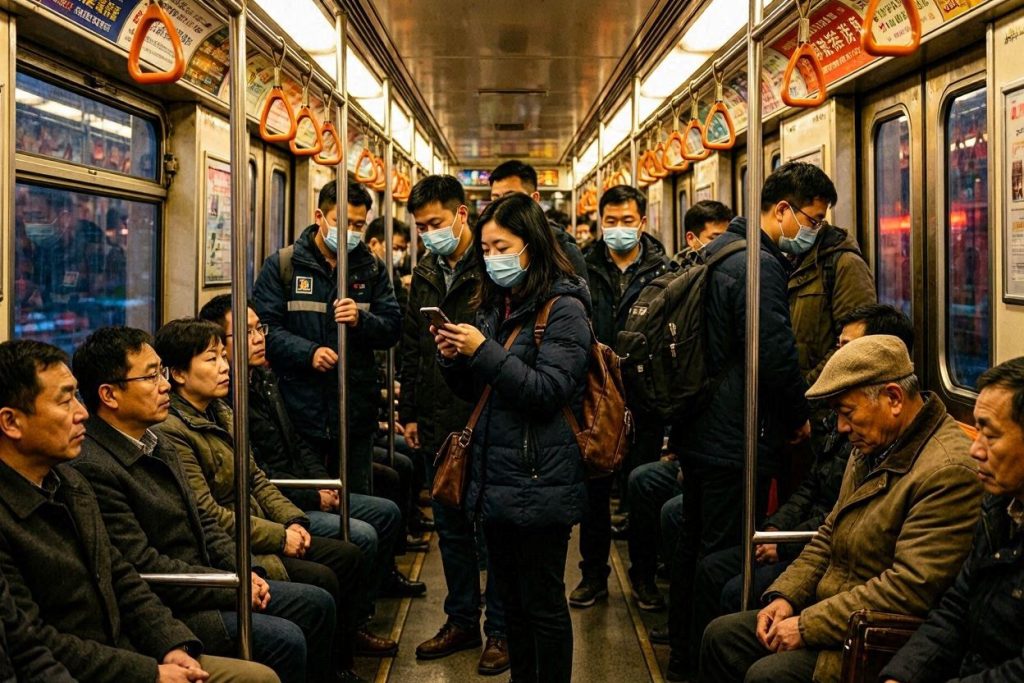
A real comparison from 2026: A mid-level manager at a foreign company in Shanghai earns ¥40,000 per month — about ¥29,000 after tax and social insurance. Rent: ¥12,000. Commute and meals: ¥5,000. Disposable income: ¥12,000.
The same role in Chengdu: ¥25,000 per month — about ¥18,500 after deductions. Rent: ¥4,000. Commute and meals: ¥2,000. Disposable income: ¥12,500.
The Chengdu manager has more money left at the end of each month.
This isn’t simply about Chengdu being cheaper. It’s about a blind spot in how most foreign companies structure their China compensation strategy: the enormous gap between nominal salary and real purchasing power across Chinese cities.

The False Prosperity of Tier-1 Cities
Salary data from Sun Tzu China shows that tier-1 cities (Beijing, Shanghai, Shenzhen, Guangzhou) pay an average of 35-50% more than tier-2 cities like Chengdu, Wuhan, Nanjing, and Suzhou. But after adjusting for living costs, that gap shrinks to 10-20% — and for some roles, it reverses entirely.
Take IT: a Java backend engineer with five years of experience commands ¥450,000-550,000 in Beijing, versus ¥300,000-380,000 in Chengdu. After housing costs, the disposable income gap narrows to roughly ¥50,000. Beijing’s median rent is 2.5 times that of Chengdu — and that single factor consumes most of the salary premium.
The Shenzhen-vs-Suzhou comparison is even starker. A supply chain manager in Shenzhen earns approximately ¥500,000, paying ¥9,000-12,000/month for comparable housing. The same role in Suzhou pays approximately ¥380,000, with similar-quality housing at ¥4,000-5,000/month. After basic living expenses, Suzhou’s disposable income actually exceeds Shenzhen’s.
Why Foreign Companies Should Rethink City Salary Strategy
Three structural shifts are making the old approach obsolete.
First, talent is voting with its feet. Since 2025, the number of professionals leaving tier-1 cities for second-tier cities has hit record highs. BOSS Zhipin data shows over 15% of active job seekers are considering leaving Beijing, Shanghai, Guangzhou, or Shenzhen in Q1 2026 — double the 2023 figure. The top drivers: living costs (57%) and housing pressure (28%), not career development.
Second, remote and hybrid work has changed the geography of talent. More foreign companies now allow 2-3 remote days per week. This has weakened the assumption that “where you work equals where you live.” A candidate living in Suzhou while working for a Shanghai-based multinational is increasingly common — and increasingly accepted.
Third, cost pressure is forcing precision. Operating costs in China rose across the board in 2026 — higher social insurance bases, rising compliance costs, intensifying talent competition. Foreign companies can no longer afford blanket high-compensation policies. If Chengdu can deliver the same talent quality at 30% lower cost, the question becomes: why pay the Shanghai premium?
The City Compensation Power Gradient
Based on Q1 2026 data, Chinese cities sort into four tiers by real purchasing power:
Tier 1 (High salary, high cost, moderate real purchasing power):
Shanghai, Beijing. High nominal salaries but housing consumes 30-40%. Good for early-career talent seeking platform value, and senior executives who can negotiate housing allowances.
Tier 2 (Medium salary, medium cost, strong real purchasing power):
Shenzhen, Guangzhou, Hangzhou. Shenzhen offers near-Shanghai salaries with slightly lower housing costs. Hangzhou benefits from the Alibaba ecosystem and housing prices that moderated after the 2023-2025 correction.
Tier 3 (Medium-low salary, low cost, best real purchasing power):
Suzhou, Nanjing, Chengdu, Wuhan, Chongqing. Nominal salaries are 25-35% below tier-1, but housing costs are only 40-60%. For mid-level roles (director and below), these cities offer the best value proposition.
Tier 4 (Low salary, very low cost, suitable for volume hiring):
Changsha, Xi’an, Zhengzhou, Hefei. Nominal salaries are less than half of Shanghai’s, but operational costs and talent availability make them attractive for specific industries and large-scale hiring.
Practical Recommendations for Foreign HR Teams
- Stop using a single national salary grid. A unified compensation system with a “Beijing/Shanghai multiplier” is no longer sufficient. The better approach is city-by-city market benchmarking — and critically, don’t just compare nominal salaries. Compare competitive dynamics. Hangzhou’s internet talent market is ultracompetitive, but its traditional industry premium is modest. Wuhan has abundant manufacturing talent but scarce AI professionals. Within the same city, supply-demand curves vary completely by function.
- Exploit salary arbitrage opportunities. A European chemical company recently drew industry attention by establishing its China shared services center in Suzhou, relocating finance, HR, and IT support functions from Beijing. Suzhou equivalent roles cost 25% less in salary, 40% less in office rent, and experienced 10 percentage points lower turnover. Over three years, the Suzhou center’s total operating cost was approximately 35% below the Beijing alternative.
- Sell the “life package,” not the “salary package.” More candidates now ask not just “what’s the salary,” but “what’s the cost of living in this city,” “does the company offer housing support,” and “what’s the commute time.” A German company’s Wuhan office offered a compelling proposition: “Salary matching Shanghai peer levels” + “Wuhan housing costs are approximately one-fifth of Shanghai’s.” That single combination generated 150 qualified applications in one month — far exceeding expectations.
- Beware the tier-2 trap. Not every second-tier city works for every industry. Xi’an has deep defense and semiconductor talent but scarce consumer marketing professionals. Changsha has strong creative and consumer sectors but limited financial talent. When deciding on geographic expansion, foreign companies must verify that the target city actually has the talent pool they need — not just attractive cost data.
A Trend Worth Watching
In Q1 2026, Sun Tzu China tracked an interesting data point: foreign companies’ job postings in second-tier cities grew 25% year-over-year, compared to just 6% growth in tier-1 cities. This is not random variation — it’s an accelerating structural shift.
The logic is clear. Once a foreign company has an established business in China, it no longer needs to offer “Beijing/Shanghai top-tier salary + benefits” to attract pioneering talent. It needs “a city branch that can reliably produce high-quality talent over the long term” — and second-tier cities’ comprehensive competitiveness is rising fast.
For HR leaders, 2026’s city compensation strategy is no longer about “where you set up, pay that city’s rate.” It’s about answering a harder question: given that this person could live anywhere, does my compensation package let them live better in this city than they would in another?
That question may be the single most important variable in China talent strategy for the next several years.